

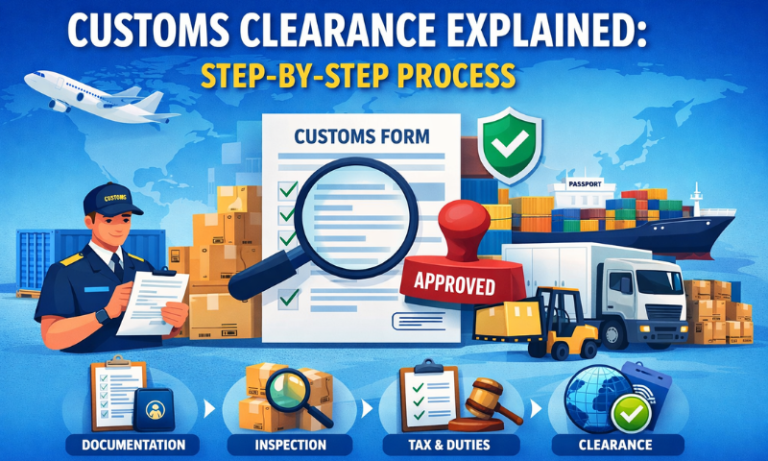
International shipping is a vital part of today’s global economy. Whether you’re a business importing goods or an individual sending products across borders, one key process you’ll always encounter is customs clearance.
At first glance, customs clearance can seem complex—filled with paperwork, regulations, and approvals. Once you’re familiar with the steps, it becomes far more manageable.
In this guide, we’ll walk you through the customs clearance process step by step in a clear and practical way, so you know exactly what to expect.
What Is Customs Clearance?
Customs clearance is the official procedure required to move goods across international borders. It involves verifying shipments, assessing duties and taxes, and ensuring compliance with the regulations of the importing or exporting country.
Every shipment must go through customs before it can be released for delivery. This process helps governments regulate trade, collect revenue, and prevent the movement of restricted or illegal goods.
Why Customs Clearance Matters
A smooth customs clearance process plays a major role in successful shipping operations. It ensures:
- Timely delivery of goods
- Compliance with international trade laws
- Accurate duty and tax payments
- Reduced risk of penalties or shipment delays
For businesses that rely on global logistics, efficient customs clearance is essential to maintaining supply chain continuity and customer satisfaction.
Step-by-Step Customs Clearance Process
Let’s break down the process into simple steps:
1. Document Preparation
The process begins with preparing all necessary documents before the shipment arrives at its destination.
Common documents include:
- Commercial invoice
- Packing list
- Bill of lading or airway bill
- Certificate of origin
- Import/export permits (if required)
Accurate documentation is critical. Any mismatch or missing information can result in delays or additional inspections.
2. Submission to Customs
Once the shipment reaches the destination country, the documents are submitted to customs authorities. This is often handled by a customs clearing agent or logistics provider.
They ensure that all paperwork is correctly filed and meets the country’s regulatory requirements.
3. Customs Declaration
In this step, the shipment is officially declared to customs. Key details provided include:
- Description of goods
- Quantity and value
- HS (Harmonized System) code
- Country of origin
The HS code is especially important, as it determines the duty rates and applicable taxes.
4. Duty and Tax Assessment
Customs authorities review the declaration and calculate the duties and taxes applicable to the shipment.
These may include:
- Import duty
- VAT or GST
- Additional handling or regulatory charges
The total cost depends on factors such as the type of goods, their value, and applicable trade regulations.
5. Payment of Duties
Before the goods can be released, all duties and taxes must be paid.
Timely payment is crucial to avoid delays, storage charges, or demurrage fees. Many businesses rely on experienced clearing agents to handle this step efficiently.
6. Inspection (If Required)
Some shipments may be selected for inspection. This can involve:
- Physical examination of goods
- Verification of documents
- Compliance checks
Inspections are typically random or based on risk factors such as shipment value or product type.
7. Clearance Approval
Once all checks are completed and payments are cleared, customs authorities grant approval.
At this stage, the shipment is officially cleared and ready for release.
8. Final Delivery
After clearance, the goods are handed over to the logistics provider for final delivery to the consignee.
This marks the completion of the customs clearance process.
Common Challenges in Customs Clearance
While the process is straightforward, certain issues can still cause delays in customs clearance. Common challenges include:
- Incomplete or incorrect documentation
- Misclassification of goods
- Delayed duty payments
- Regulatory restrictions
- Unexpected inspections
Being aware of these challenges helps businesses plan ahead, avoid costly delays, and ensure a smoother customs clearance process.
Tips for a Smooth Customs Clearance Process
To ensure a hassle-free customs clearance experience, consider the following steps:
- Double-check all documentation before shipment
- Use accurate HS codes
- Plan for duties and taxes in advance
- Work with experienced clearing agents
- Stay updated with
These simple steps can significantly reduce delays and additional costs.
The Role of Professional Clearing Agents
Handling customs clearance independently can be time-consuming, especially for businesses dealing with frequent international shipments. Professional clearing agents simplify the process by:
- Managing documentation
- Ensuring compliance with regulations
- Handling duty payments
- Coordinating with customs authorities
This is particularly valuable in major global trade hubs, where regulations and shipment volumes can be more complex and fast-paced.
Frequently Asked Questions (FAQs)
1. What is customs clearance in shipping?
Customs clearance is the official process of getting goods approved by customs authorities to enter or leave a country. It involves documentation, duty payments, and compliance checks.
2. How long does customs clearance take?
Customs clearance can take anywhere from a few hours to several days, depending on the accuracy of documents, type of goods, and whether inspection is required.
3. What documents are required for customs clearance?
The most common documents include a commercial invoice, packing list, bill of lading or airway bill, certificate of origin, and any required import/export permits.
4. What is an HS code in customs clearance?
An HS (Harmonized System) code is an internationally standardized code used to classify traded goods. It helps determine duties, taxes, and regulations for a shipment.
5. Who is responsible for customs clearance?
Customs clearance is usually handled by the importer, exporter, or a licensed customs clearing agent acting on their behalf.
Final Thoughts
Customs clearance may seem complicated at first, but in reality, it’s a well-structured process designed to ensure safe, compliant, and efficient international trade. Once you understand the key steps—from accurate documentation to final delivery—you can handle shipments with much greater confidence and fewer delays.
For businesses dealing with global logistics in Dubai, the right knowledge combined with expert support can make a significant difference. A well-managed customs clearance process not only saves valuable time and costs but also ensures that your cargo moves seamlessly across borders without unnecessary disruptions.
Looking to learn more?
Explore our detailed LinkedIn article,
“Top 10 Things Every Importer Must Know About Customs Clearance Services in Dubai,” where we break down essential tips and insights to help you avoid common mistakes and streamline your shipping process.
At the end of the day, staying informed and working with the right logistics partner ensures your business keeps moving forward without delays—and that’s where Al Areeb Clearing & Shipping LLC makes the difference.