

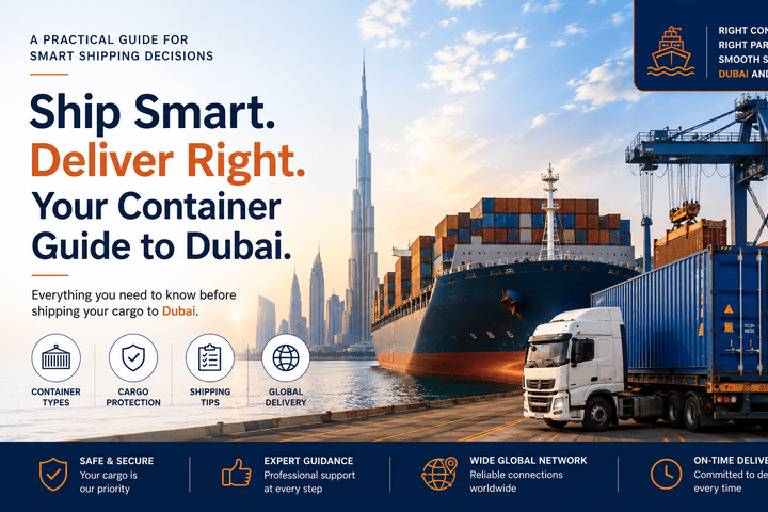
International trade depends on efficient and reliable shipping solutions. Whether you are exporting commercial goods, industrial equipment, or personal belongings, selecting the right shipping container plays a significant role in ensuring your cargo reaches its destination safely and cost-effectively.
Choosing the correct container is more than simply deciding between a 20ft or 40ft unit. The size, weight, destination, and nature of your cargo all play a key role in determining the most suitable shipping container for your shipment.. If you are planning a shipping container to Dubai, understanding these factors can help you make informed decisions while avoiding unnecessary costs and delays.
This guide explains everything you need to know before selecting a shipping container and highlights why choosing an experienced logistics partner is equally important.
Why Choosing the Right Shipping Container Matters
Every shipment is different. A container that works perfectly for one type of cargo may not be suitable for another. Selecting the wrong container can lead to damaged goods, increased freight charges, customs delays, and inefficient use of available space.
The right container offers several benefits, including:
- Better protection for your cargo
- Improved loading efficiency
- Lower transportation costs
- Reduced risk of cargo damage
- Faster customs clearance
Whether your shipment is small or large, investing time in choosing the right container ensures a smoother shipping experience.
Understanding Different Types of Shipping Containers
20ft Standard Container
The 20ft standard container is one of the most widely used containers in international shipping. It is ideal for transporting heavy cargo such as machinery, metal products, construction materials, and palletized goods.
Since weight capacity is usually reached before volume capacity, this container is often the preferred choice for dense cargo.
40ft Standard Container
Businesses transporting larger quantities of goods often choose the 40ft container. It provides significantly more storage space while remaining one of the most economical options for high-volume shipments.
Furniture, textiles, retail products, and packaged consumer goods are commonly shipped using this container.
High Cube Container
High Cube containers offer additional height compared to standard containers, making them suitable for lightweight but bulky cargo. Businesses transporting oversized cartons or equipment frequently choose this option.
Refrigerated Containers
Products such as food, pharmaceuticals, flowers, and chemicals require controlled temperatures during transportation. Refrigerated containers, commonly known as reefer containers, maintain consistent temperatures throughout the journey.
Open Top and Flat Rack Containers
Oversized industrial equipment, construction machinery, and project cargo often require specialised containers. Open Top and Flat Rack containers provide flexibility for cargo that cannot fit inside standard containers.
Factors to Consider Before Choosing a Shipping Container
Selecting the appropriate container depends on several important factors.
Cargo Size and Volume
Understanding the dimensions of your cargo helps determine the most suitable container. Efficient space utilisation reduces shipping costs while protecting goods during transit.
Cargo Weight
Heavy shipments generally fit better inside a 20ft container because of weight limitations. Larger but lighter cargo often benefits from the additional capacity of a 40ft container.
Type of Goods
Certain products require specialised handling. Fragile items need secure packaging, while temperature-sensitive goods require refrigerated containers. Oversized cargo may require customised shipping solutions.
Shipping Destination
Destination requirements should always be considered before booking your shipment. If you are arranging a shipping container to Dubai, ensure your documentation, packaging, and container selection comply with UAE customs regulations to avoid unnecessary delays.
Open Top and Flat Rack Containers
Oversized industrial equipment, construction machinery, and project cargo often require specialised containers. Open Top and Flat Rack containers provide flexibility for cargo that cannot fit inside standard containers.
Tips for Maximising Container Space
Proper loading techniques improve both safety and cost efficiency.
Here are a few best practices:
- Distribute weight evenly throughout the container.
- Stack cargo securely to prevent movement.
- Use quality packing materials.
- Secure goods with straps or blocking where necessary.
- Leave enough space for customs inspection if required.
Professional container loading helps minimise damage while making better use of available space.
Documentation Required for International Shipping
Accurate documentation is essential for smooth international shipping. Missing or incorrect paperwork can delay customs clearance and increase overall shipping costs.
Common documents include:
- Commercial Invoice
- Packing List
- Bill of Lading
- Certificate of Origin (where applicable)
- Import and Export Permits
- Customs Declaration Documents
Working with experienced logistics professionals helps ensure all documentation is prepared correctly before shipment.
Why Choosing the Right Logistics Partner Matters
A successful shipment depends not only on the right container but also on the expertise of your logistics provider.
Many businesses work with trusted shipping companies in UAE because they offer complete freight solutions, including cargo handling, customs clearance, warehousing, documentation, and transportation. Their industry knowledge helps businesses avoid costly delays while ensuring shipments move efficiently across international borders.
Similarly, established shipping companies understand local port operations and customs regulations, making them valuable partners for businesses importing or exporting through the UAE. Their experience allows shipments to move smoothly from arrival to final delivery.
Businesses also rely on experienced logistics companies to manage complete supply chains across sea freight, air freight, and land transportation. Having a single logistics partner simplifies operations and improves shipment visibility.
If you are looking for reliable logistics companies in Dubai, choose a provider with proven expertise in international freight, strong carrier partnerships, and end-to-end logistics solutions.
Shipping Containers and Dubai's Global Trade Network
Dubai has become one of the world’s leading logistics hubs, connecting businesses across Asia, Europe, Africa, and the Middle East. Modern port infrastructure, efficient customs procedures, and excellent connectivity make Dubai a preferred destination for international trade.
Businesses shipping to Dubai benefit from reliable port facilities, advanced cargo handling systems, and streamlined customs processes. Choosing the right shipping container ensures goods arrive safely while reducing transportation costs and improving operational efficiency.
Whether you are shipping commercial products, industrial equipment, or project cargo, proper planning plays an important role in achieving successful deliveries.
Final Thoughts
Selecting the right shipping container is one of the most important decisions in international logistics. Understanding your cargo requirements, choosing the appropriate container type, preparing accurate documentation, and working with experienced logistics professionals all contribute to a successful shipment.
If you are planning a shipping container to Dubai, partnering with an experienced freight forwarding company like Al Areeb Shipping can simplify every stage of the process—from container selection and documentation to customs clearance and final delivery.
With years of experience in international freight and logistics, Al Areeb Shipping is committed to providing reliable, efficient, and cost-effective shipping solutions tailored to your business needs. By making informed decisions and working with trusted logistics experts, you can ensure your cargo reaches its destination safely and on time.
Frequently Asked Questions
Which shipping container is best for heavy cargo?
A 20ft standard container is generally recommended for heavy cargo because it reaches weight capacity before volume capacity, making it ideal for dense shipments.
How do I choose the right shipping container?
Consider the size, weight, nature of your cargo, destination requirements, and transportation method before selecting a container.
Why is Dubai a preferred shipping destination?
Dubai offers world-class ports, efficient customs procedures, and strategic connectivity to major global markets, making it one of the leading logistics hubs in the world.
Can a logistics company help with customs documentation?
Yes. Experienced logistics providers assist with documentation, customs clearance, freight planning, warehousing, and cargo transportation, helping businesses avoid delays and ensure smooth international shipping.